
Intentional Leadership: Mastering Your Time, Energy, and Priorities for Continued Success
PROFESSIONAL GROWTH
Tarun Mehta
2/13/20266 min read
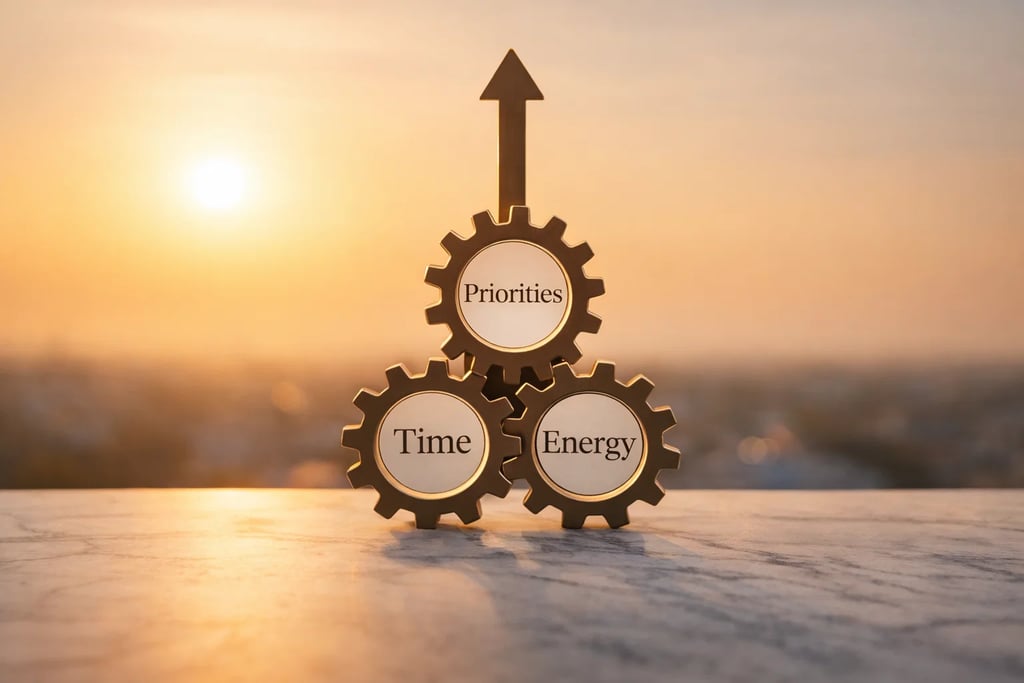
Leading with Intention: Mastering Your Time, Energy, and Priorities for Continued Success
Leadership is about being purposeful and intentional. It is not about being busy all the time. Many leaders fill their calendars from morning to evening, answer countless messages, attend meeting after meeting, and still feel they are falling behind. The problem is rarely a lack of effort. The real challenge is a lack of intention.
To lead with intention means choosing how you spend your time, where you direct your energy, and what you decide truly matters. When you master these three areas, your leadership becomes clearer, calmer, and far more effective.
Why Intention Matters in Leadership
Every leader influences others through decisions, actions, and attitude. When you operate without intention, you react to whatever appears in front of you. Urgent requests take control of your schedule. Other people’s priorities shape your day. Over time, this creates stress and confusion.
Intentional leadership is different. It begins with clarity. You understand your purpose. You know the direction you want your team or organization to move toward. With that clarity, you can make better choices about how to use your limited resources.
Time is limited. Energy is limited. Attention is limited. If you do not manage them carefully, they will be spent for you.
Mastering Time Without Letting It Master You
Many people think time management is about squeezing more tasks into a day. That approach often leads to exhaustion. A better way is to focus on what deserves your time.
Start by identifying your most important responsibilities as a leader. These might include setting strategy, developing people, making key decisions, and building relationships. Notice that these tasks often require deep thinking and meaningful conversation. They are not quick items that can be rushed.
Look at your calendar and ask yourself a simple question. Does my schedule reflect my real priorities? If most of your time is spent on minor issues or routine approvals, you may need to adjust.
Think about allocating specific periods of time dedicated to high-priority tasks. During those periods, limit interruptions. Turn off unnecessary notifications. Protect that space as if it were a meeting with your most important client. In reality, it is a meeting with your future.
Another helpful habit is learning to say no. Not every request deserves your attention. When you decline something that does not align with your goals, you create space for what truly matters. Saying no respectfully is not selfish. It is responsible leadership.
Managing Energy Instead of Just Hours
Two leaders can work the same number of hours and produce very different results. The difference often comes down to energy.
Energy affects how you think, how you communicate, and how you handle pressure. When your energy is high, you are more patient, creative, and focused. When it is low, even simple tasks feel heavy.
To manage energy well, pay attention to your natural rhythms. Some people think more clearly in the morning. Others are sharper later in the day. Whenever possible, plan demanding tasks during times when you have the most energy.
Physical habits matter more than many leaders admit. Sleep, movement, and nutrition directly affect mental performance. Skipping rest might seem productive in the short term, but over time it reduces clarity and resilience.
Emotional energy is equally important. Leadership brings responsibility and sometimes conflict. If you carry frustration from one meeting into the next, it spreads to others. Develop small reset rituals. Take a short walk. Practice deep breathing. Pause before responding when emotions run high. These simple actions help you remain steady.
Finally, protect your mental space. Constant information drains attention. You do not need to read every article or respond to every message immediately. Choose when to engage and when to step back. A clear mind is one of a leader’s greatest assets.
Clarifying and Protecting Priorities
Priorities are the bridge between vision and daily action. Without clear priorities, even talented teams lose focus.
Begin with the big picture. What are the top three outcomes that must be achieved this quarter or this year? Keep the list short. When everything is labelled important, nothing truly is.
Once those outcomes are defined, connect them to weekly actions. Ask yourself each week which tasks directly support those goals. If an activity does not move the organization forward in a meaningful way, reconsider its place on your schedule.
Communicate priorities clearly to your team. People cannot support what they do not understand. Share not only what is important but why it matters. When team members see the connection between their work and the larger mission, motivation increases.
Revisit priorities regularly. Conditions change. New challenges appear. Leading with intention means adjusting thoughtfully rather than reacting impulsively. A short weekly review can keep you aligned and prevent drift.
Aligning Time, Energy, and Priorities
The real power comes when time, energy, and priorities work together.
Imagine you identify strategic planning as a top priority. You then schedule dedicated time for it during your peak energy hours. You remove distractions and prepare in advance. The quality of your thinking improves. Decisions become clearer. Your team receives better guidance.
On the other hand, if you attempt strategic work late at night when you are exhausted and distracted, the results will suffer even if the task itself is important.
Alignment requires awareness. Notice when your schedule does not match your stated priorities. Notice when you are spending high energy on low-impact activities. These observations are not reasons for guilt. They are opportunities for correction.
One practical tool is a weekly reflection. At the end of each week, ask yourself three questions. What created the most value? What drained my energy without a meaningful return? What will I adjust next week? Over time, these reflections sharpen your judgment.
Leading by Example
Your approach to time and energy influences your team more than any policy. If you send messages late at night and expect immediate replies, others will feel pressure to do the same. If you constantly rush from meeting to meeting, your team may believe busyness equals importance.
Model the behavior you want to see. Demonstrate focus during conversations. Give people your full attention. Respect start and end times for meetings. Encourage healthy work patterns. When leaders act with intention, it creates permission for others to do the same.
Delegation is another essential practice. Holding on to every decision limits both your growth and your team’s development. Identify tasks that others can handle. Provide clear expectations and support. Trust them to deliver. This frees your time for responsibilities only you can fulfill.
Overcoming Common Obstacles
Even with the best intentions, challenges arise. Unexpected issues will appear. Crises will demand immediate action. The goal is not to eliminate surprises but to respond without losing direction. When something urgent surfaces, evaluate it against your priorities. Does it truly require your involvement? Can someone else handle it? How can you address it while protecting essential work?
Another obstacle is the desire to please everyone. Leaders often feel pressure to always be available. Remember that your primary responsibility is to the mission and the long-term health of the organization. Making thoughtful choices may disappoint some people in the moment, but it ultimately serves the greater good.
Perfectionism can also consume time and energy. Striving for excellence is admirable, but chasing flawless results in every small detail is not sustainable. Decide where high precision is required and where good enough is sufficient.
The Long-Term Impact of Intentional Leadership
When you lead with intention, the benefits extend beyond productivity. You experience less stress because your actions align with your values. Your team gains clarity and confidence because direction is consistent. Decisions improve because they are grounded in purpose rather than pressure.
Over time, intentional leadership builds trust. People know what to expect from you. They see that your time and attention are directed toward meaningful goals. This consistency strengthens culture and performance.
Most importantly, you create space for what truly matters. Leadership is not only about results. It is also about growth, relationships, and legacy. By managing time, energy, and priorities wisely, you ensure that your daily choices reflect the kind of leader you aspire to be.
A Simple Starting Point
If this all feels overwhelming, start small. Choose one area to improve this week. Perhaps you protect one hour for focused work. Perhaps you review your top three priorities and share them with your team. Perhaps you commit to better rest.
Small changes practiced consistently lead to significant transformation.
Leading with intention is not a one-time decision. It is a daily practice. Each morning offers a fresh opportunity to choose where your time will go, how your energy will be used, and which priorities will guide your actions.
When you master these elements, you do more than manage tasks. You lead with clarity, purpose, and impact.
Video available at: https://youtu.be/EkW1X24KJsk

Ascend2Elevate™
Transform today, Thrive tomorrow
© 2026. All rights reserved.
PS: The content provided on this website is intended for educational and informational purposes only and reflects the views of the author. Please consider your individual circumstances before applying any information or recommendations. For further information, please refer to our Terms and Conditions here.
Office 4074, Ground Floor, 470, St Kilda Rd, Melbourne, VIC-3004, Australia